


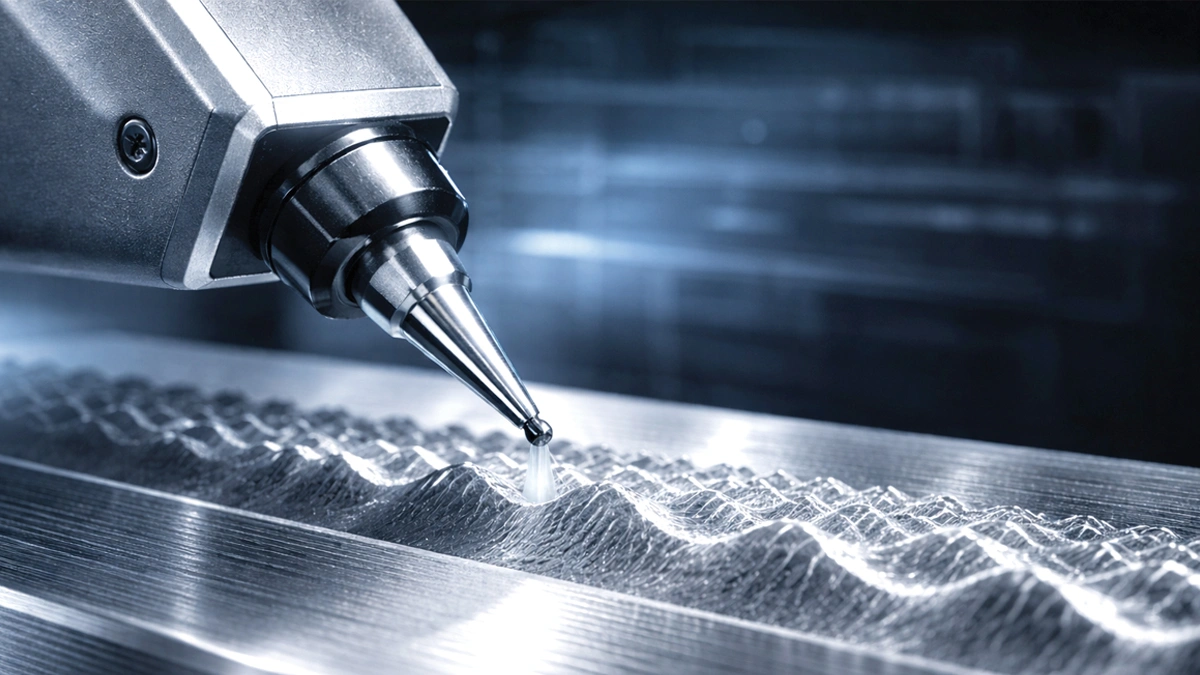
In the world of modern manufacturing, where precision is measured in microns and performance is often determined by surface integrity, surface finish inspection assumes critical importance. Far beyond mere aesthetics, the surface finish of a component directly influences its functionality, durability, frictional behavior, wear resistance, and even fatigue life. Particularly in high-performance industries such as aerospace, automotive, medical devices, and heavy engineering, the ability to accurately measure and control surface finish is not just desirable—it is indispensable.
Understanding Surface Finish: More Than Just Smoothness
Surface finish, often referred to as surface texture, encompasses three primary elements: roughness, waviness, and lay.
- Roughness refers to the fine irregularities on the surface, typically resulting from the manufacturing process.
- Waviness represents more widely spaced deviations caused by machine vibrations or deflections.
- Lay indicates the direction of the predominant surface pattern, influenced by the machining method.
These characteristics are quantified using parameters such as Ra (average roughness), Rz (mean peak-to-valley height), and Rt (total height of the profile). While Ra is the most commonly specified parameter, relying solely on it can be misleading, as it does not capture the full complexity of surface texture.
Why Surface Finish Matters
The importance of surface finish extends across multiple performance dimensions:
- Friction and Wear: Smoother surfaces reduce friction but may affect lubrication retention.
- Fatigue Strength: Surface irregularities can act as stress concentrators, reducing fatigue life.
- Sealing and Mating: Proper surface finish is essential for effective sealing in components like valves and gaskets.
- Aesthetics and Coating Adhesion: Surface texture influences the appearance and the effectiveness of coatings or plating.
Thus, surface finish is not just a quality parameter—it is a functional requirement that must be tailored to the application.
Inspection Techniques: From Contact to Non-Contact
Surface finish inspection has evolved significantly, offering a range of techniques to suit different applications:
1. Contact Profilometers
These are among the most widely used instruments. A stylus traverses the surface, recording vertical deviations to generate a profile. They are highly accurate and suitable for a wide range of materials and finishes. However, they may not be ideal for very soft or delicate surfaces.
2. Non-Contact Optical Methods
Technologies such as laser scanning, white light interferometry, and confocal microscopy provide high-resolution measurements without physically touching the surface. These methods are ideal for fragile, ultra-smooth, or micro-scale components.
3. 3D Surface Measurement Systems
Unlike traditional 2D profilometers, 3D systems capture the entire surface topography, enabling a more comprehensive analysis. Parameters such as surface volume, peak density, and texture direction can be evaluated.
4. Replica Techniques
In cases where direct measurement is difficult—such as internal surfaces or large components—replica materials are used to capture the surface profile, which is then analyzed separately.
Equipment and Metrology Integration
Modern surface finish inspection systems are increasingly integrated with advanced metrology solutions. Coordinate Measuring Machines (CMMs), optical scanners, and hybrid systems can now measure both geometry and surface texture in a single setup.
Portable surface roughness testers are also widely used on shop floors, enabling quick and convenient inspection without removing components from the production line. These devices are particularly valuable in heavy engineering environments.
Automation and Digital Advancements
The integration of digital technologies is transforming surface finish inspection into a more intelligent and automated process.
- Automated Inspection Systems: Inline inspection systems can measure surface finish in real time during production, reducing the need for post-process checks.
- Data Analytics: Advanced software analyzes measurement data to identify trends, detect anomalies, and support process optimization.
- AI and Machine Learning: These technologies are being used to correlate surface finish with process parameters, enabling predictive quality control.
- Digital Traceability: Inspection data is stored and linked to specific components, enhancing traceability and compliance.
Such advancements are particularly valuable in high-volume production environments, where consistency and speed are critical.
Challenges in Surface Finish Inspection
Despite technological progress, several challenges persist:
- Complex Geometries: Measuring surface finish on curved or intricate surfaces can be difficult.
- Material Variability: Different materials reflect light differently, affecting optical measurement accuracy.
- Environmental Factors: Vibrations, temperature variations, and contamination can influence measurement results.
- Interpretation of Data: Selecting the right parameters and understanding their implications require expertise.
Moreover, over-specification of
surface finish can lead to unnecessary costs, while under-specification can compromise performance. Striking the right balance is key.
Standards and Compliance
Surface finish inspection is governed by international standards such as ISO and ASME, which define measurement methods, parameters, and reporting formats. Adhering to these standards ensures consistency, comparability, and reliability of results across different industries and geographies.
Applications Across Industries
1. Automotive : Engine components, transmission parts, and sealing surfaces require precise surface finishes to ensure performance and longevity.
2. Aerospace : Critical components such as turbine blades and structural parts demand stringent surface finish control to withstand extreme conditions.
3. Medical Devices: zImplants and surgical instruments require ultra-smooth surfaces for biocompatibility and hygiene.
4. Heavy Engineering: Large components such as shafts, gears, and bearings rely on appropriate surface finishes for durability and efficient operation.
5. Sustainability and Efficiency
Optimizing surface finish can contribute to sustainability by reducing frictional losses, improving energy efficiency, and extending component life. Advanced inspection techniques also minimize rework and scrap, leading to more efficient use of resources.
The Road Ahead
The future of surface finish inspection lies in greater integration with smart manufacturing ecosystems. Real-time, inline measurement systems will become more prevalent, enabling immediate feedback and process correction. Advances in sensor technology and data analytics will further enhance accuracy and reliability.Additionally, the shift toward functional surface engineering—where surfaces are designed with specific textures for desired performance—will require more sophisticated inspection methods and parameters.
Conclusion
Surface finish inspection is a nuanced and critical aspect of modern manufacturing, bridging the gap between design intent and functional performance. It demands a deep understanding of material behavior, process dynamics, and measurement science. As industries push the boundaries of precision and performance, the importance of accurately assessing and controlling surface finish will only grow. In this intricate domain, what lies beneath the surface often determines the success of the whole—making surface finish inspection a true cornerstone of quality engineering.