





LVD Group has evolved over more than seven decades from a press brake specialist into a global one-stop provider of sheet metalworking solutions spanning laser cutting, punching, bending, automation and software. As manufacturers increasingly seek connected, flexible and sustainable production, LVD is leveraging CADMAN, AI, robotics and integrated technologies to help customers improve productivity and profitability. With India emerging as a key manufacturing hub, LVD sees significant opportunities across automotive, infrastructure, aerospace, defence and general engineering, discovers FORMING TECH REVIEW in a conversation with the leadership of LVD. Excerpts:
Q. LVD has evolved from a press brake specialist into a comprehensive provider of sheet metal fabrication solutions. What strategic milestones have shaped this transformation, and what differentiates LVD in today’s highly competitive global market?
There are numerous milestones for LVD over the 70 plus years since the inception of LVD in 1952. One of the key differentiators for LVD is that we have grown into a one-stop-shop for Sheet and Plate Metalworking, offering Laser, Punching, Bending and Integration (Software) solutions to our customers. Several key milestones in our company’s history have helped us achieve that:
1979 – LVD makes the key strategic decision to design their own CNC Press control
1989 – LVD enter the Laser Cutting market place adding LASER to our core technologies
1990 – LVD acquires Shape machines a British Punch Press manufacturer and PUNCHING is added to our core technologies
1990 – LVD introduces CADMAN® software for offline programming of LVD machines
1998 – LVD acquires StrippitInc. a US Punch Press manufacturer adding decades of punching experience and technology to the group.
1998 – LVD launches CADMAN CNC the first Windows® based Press Brake control
2001 – LVD introduces it’s patented Easy-Form® Laser – Adaptive Bending Technology.
2008 – LVD – launches it’s first Touch Screen icon driven Press Brake Control
2012 – LVD – launches ToolCell an automatic tool changing Press Brake
2013 – LVD acquires Pullmax AB a Swedish single head Punch Press manufacturer
2016 – LVD introduces Synchro-Form an award winning adaptive bending technology for XXL profiles like Crane Booms and Aircraft Fuelsages.
2018 – LVD launches Dyna-Cell as “No Robot Teaching” automated Bending Cell
2019 – LVD acquires COMPAC S.r.l. an Italian industrial automation solutions provider
2022 – LVD acquires Kuka BeNeLux Solutions and introduces a new company to the market LVD Robotic Soltions
2023 – LVD expands its product range with the introduction of Multifold panel benders
2026 – LVD announces strategic alliance with REA Robotics to further expand its solutions for heavy duty automated bending
Whilst these sixteen milestones might be a lot to mention, they are just some of the strategic milestones that LVD has achieved over what will be next year, 75 years in business. These milestones are significant to LVD’s history as they show the evolution of the company from a predominantly Press Brake based business to a true one-stop shop sheet metalworking solutions provider, which is one of LVD’s unique selling points.
Q. The sheet metal fabrication industry is rapidly embracing automation and digital manufacturing. How is LVD helping customers transition toward smart factories through its integrated machinery, software, and robotic solutions?
LVD is very much ahead of the curve when it comes to automation and digitalisation. Right from the introduction of our CADMAN® software in the early 90’s we were preaching the advantages of “Integrated Sheet Metalworking”, that’s working from one centralised database and leveraging the advantages of Big Data. Actually, LVD were already delivering integrated machine and software solutions bringing the benefits of Industry 4.0 and Smart Factories to the market even before Industry 4.0 had a name.
Moving forward LVD’s CADMAN Software with Smart Factory, Industry 4.0/5.0, and AI technology built in are at the heart of today’s and the future’s solutions from LVD.
LVD machines and CADMAN® software are helping manufacturers tackle the challenges of shorter lead-times, small batches and more complex parts. Solutions like LVD’s RBS – Robotic Bending Systems which utilise LVD CADMAN-SIM “No Robot Teaching” software are helping manufacturers tackle the rising issue of the shortage of skilled labour in the workplace.

Q. Manufacturers today are looking beyond machine performance to complete production ecosystems. How does LVD’s CADMAN® software suite enhance productivity, flexibility, and data-driven decision-making across the fabrication process?
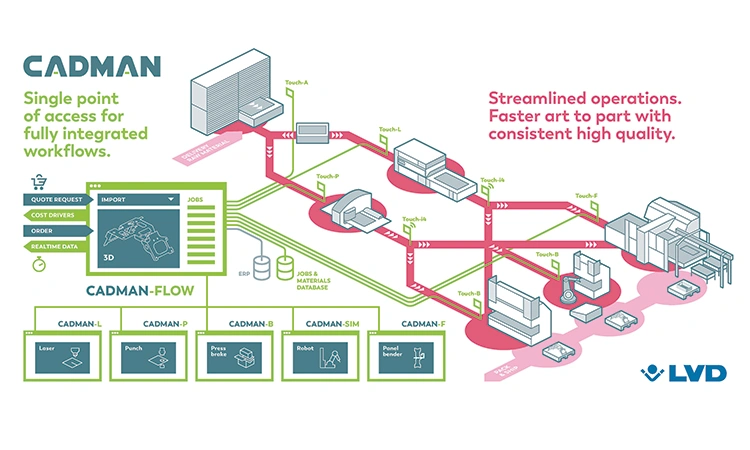
Let’s dive a bit deeper into how LVD’s CADMAN helps to enable the most efficient “Art to Part” process, that’s an electronic part file to finished and shipped part and ultimately accelerate the “order to cash cycle” when you’re a subcontractor.
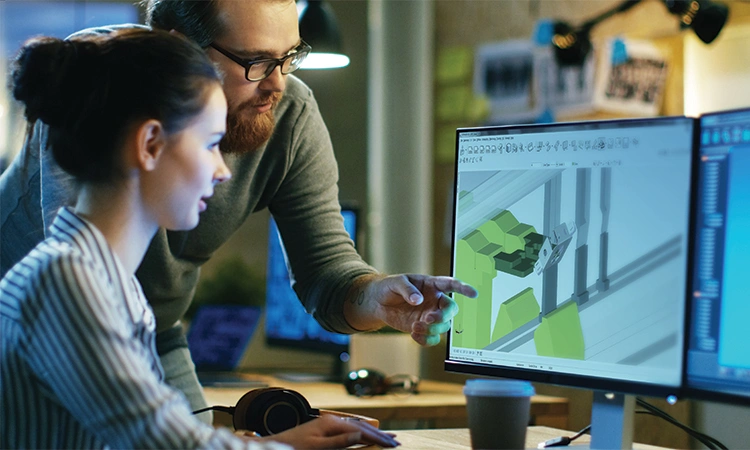
It all starts with the 3D file. Subcontractors will tell you that they receive 3D files from a wide variety of CAD systems and that’s where the challenges start. Generally speaking, the 3D files are not designed as 3D sheet metal parts, so when they are unfolded you have two issues the unfolded development is not correct because it is using neutral axis unfolding principles to unfold the part, not the real bend allowances from the tooling that the customer is using. Secondly the unfolded part may need its geometry “fixing” in order to make the part manufacturable.
Step in CADMAN® Suite.
- CADMAN – SDI – smart drawing importer – imports the part, providing the cost drivers of the part (useful for part cost estimates), SDI unfolds the part using the bending database of the LVD Press Brake that the customer is using to bend the part, so your part development is correct. Secondly SDI allows you to “fix” geometrical errors in the part to make the parts more manufacturable.
- CADMAN-JOB – if you are working with assembles or have a series of different parts to process then CADMAN -JOB takes care of that. JOB enables the operator to do batch imports of parts to create a job list and then JOB is the “Production Management Cockpit” that plans, schedules and monitors the production of the job list.
- CADMAN-B (Bending) – L (Laser) – P (Punching) – F (Folding) – SIM (Robot Bending) – handles the creation of all machine programs for Laser, Punching, Bending, Folding and Robotic Bending.
LVD’s CADMAN Suite provides a seamless, integrated solution to the complete sheet metal part manufacturing process and utilises Big Data collected by the centralised CADMAN database to help ensure the optimal efficiency of the process including cost per part.
Q. India is emerging as one of the world’s fastest-growing manufacturing destinations. How important is the Indian market in LVD’s global strategy, and what opportunities do you foresee in sectors such as automotive, infrastructure, aerospace, and general engineering?
India is a strategically important market for LVD, not only because of its size but also because of its long-term growth potential. As global manufacturers diversify their supply chains and increase investments in India, we see the country becoming one of the key drivers of future demand for advanced sheet metal processing technologies. India’s manufacturing sector is benefiting from initiatives such as Make in India, infrastructure development programs, and growing investments in industrial automation. These trends align perfectly with LVD’s core strengths in laser cutting, punching, bending, and automation solutions.
The rapid growth of electric vehicles, increased localization of components, and the need for flexible manufacturing are driving demand for high-precision laser cutting and automated bending solutions. India’s large-scale investments in railways, airports, power, transportation, and urban infrastructure are creating substantial demand for fabricated metal components. This translates into opportunities for high-productivity laser cutting systems, press brakes, and automated material handling solutions. The aerospace and defence sectors require precision, traceability, and advanced production technologies. LVD’s high-accuracy laser systems and Adaptive Bending solutions like Easy-Form® are well positioned to support suppliers serving these demanding applications.
The general engineering segment represents a broad and expanding market that includes industrial machinery, electrical equipment, agricultural machinery, and contract manufacturing. As companies modernize their operations and face increasing global competition, there is growing interest in automation, process integration, and smart manufacturing solutions. This is an area where LVD can help customers improve productivity while reducing operating costs.
Q. With increasing emphasis on sustainability, energy efficiency, and material optimization, how are LVD’s latest laser cutting, bending, and automation technologies helping manufacturers reduce waste while improving profitability?
Sustainability, energy efficiency, and material optimization are all important components of every LVD machine and software solution.
Energy efficiency is at the forefront of every customer’s mind, all LVD machines are designed with optimal energy efficiency as part of the machine design criteria. Here are couple of examples: PPEB and Easy-Form model Press Brakes employ a variable flow pump system that automatically regulates the flow and power to the Press Brake ensuring that power is not consumed when it’s not needed.
On LVD Punch Presses a variable frequency drive is used as part of a ERS – Energy Reduction System that automatically reduces the consumed power from the machine during its various different stages of operation.
When it comes to sustainability and material optimisation this is where LVD’s Software solutions make a difference. Within the LVD CADMAN Suite there are a series of intelligent algorithms that are looking to optimize material utilisation, reduce the number of tool set-ups and create the shortest production times (reduction of consumed power /gas etc.)
Q. Industry 4.0 has shifted customer expectations from standalone machines to connected manufacturing systems. How is LVD leveraging AI, connectivity, machine intelligence, and predictive capabilities to create greater value for customers?
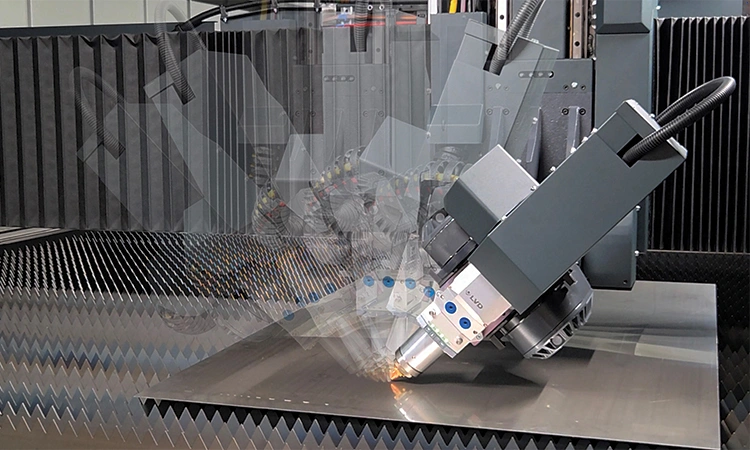
To give a further glimpse into how LVD’s centralised database / Big Data / Industry 4.0 / AI driven approach to integrated sheet metalworking we can look to how LVD will leverage AI in our Laser and Laser Automation solutions.
For years, the focus was on ever-higher laser power. Today, that evolution seems to be reaching both technical and economic limits. The biggest innovations are shifting towards software, connectivity and automation.
Artificial Intelligence will play an increasingly important role in optimising production planning, nesting, sorting, and many other processes. At the same time, machines are continuously collecting data on their own performance. They enable predictive maintenance, helping to avoid machine downtime.
Q. From a marketing perspective, what trends are you observing in customer buying behaviour across global and emerging markets? How has LVD adapted its customer engagement strategy to address these changing expectations?
LVD is always looking into the market, monitoring trends and challenges faced across the wide variety of industries that LVD works with across the globe. We are very fortunate that LVD is still after 70 plus years a family-owned company. This gives us the ability to rapidly adapt to the needs of the global market.
What customers ultimately need to achieve wherever they are in the world is to buy the right machine for the job. That means buying a machine that has the right combination of features / performance versus the purchase price of the machine. This determines the cost per part and the profit made by the customer.
LVD has adapted its range of models within each technology – Laser – Punching – Bending – Integration (Software) so that customers can select the best machine for them, striking the right Price – Performance ratio and maximizing profitability.

Q. Looking ahead, what are LVD Group’s strategic priorities over the next five years, and what new technologies or product innovations can the sheet metal fabrication industry expect from the company?
LVD as always will continue to constantly challenge conventional thinking. Just because it is done a certain way now doesn’t mean we can’t think of a better way. This thinking can be applied to all technologies.
Areas that for sure will evolve considerably within the next five years are:
- Software and the leveraging of AI,
- Automation – for optimised material flow and reduced operator fatigue,
- Robotic Automation particularly in the area of bending due to the lack of skilled labour and size of parts.
- Panel Bending machines and technology becoming a standard part of a modern-day sheet metalworking factory.
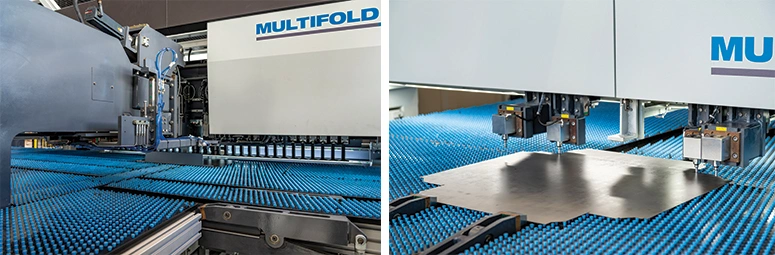
Up until now Panel Benders have been the go-to machine for businesses specialising in higher volume production of panel / box bases products. We believe that affordable Panel Bending technology like the LVD Multifold panel benders will become more common space in subcontractors and OEMS. The unique design and affordability of the Multifold panel bending automation systems make them ideally suited to kit production which is becoming the standard in nearly every sheet metalworking business.