




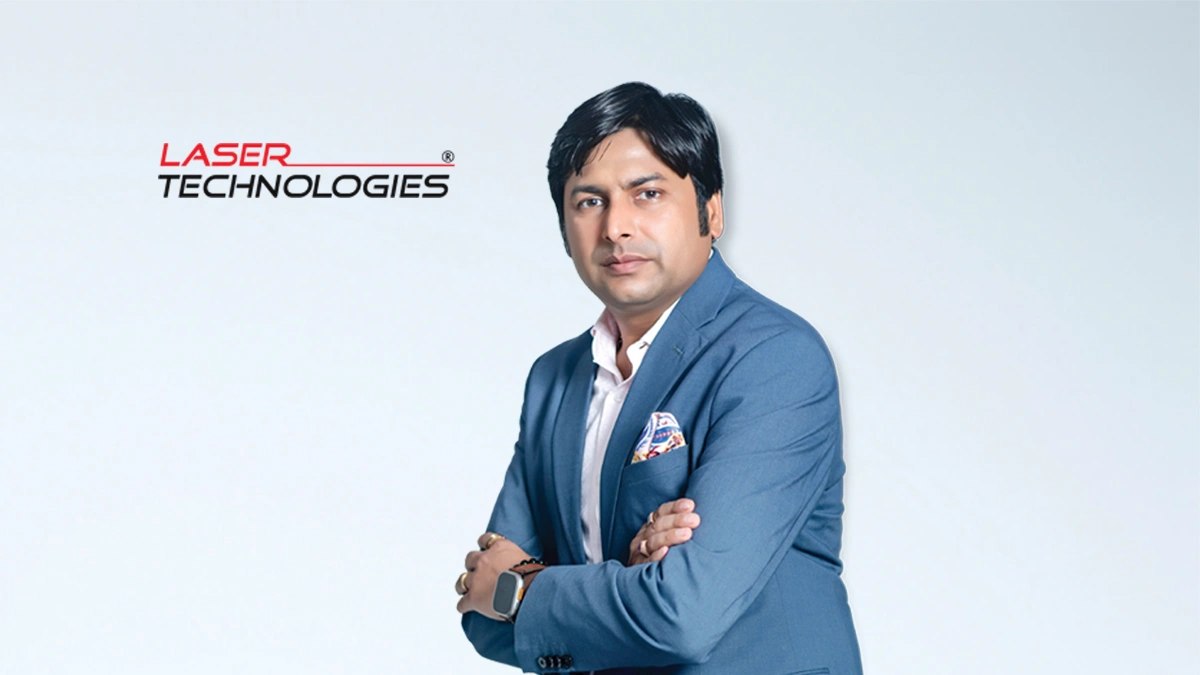
In an era where precision, speed, and adaptability define manufacturing excellence, laser technology is rapidly emerging as a game-changer across industries. At the forefront of this evolution is Dr. Rakesh Agarwal, whose vision has been instrumental in making advanced laser solutions accessible to Indian manufacturers, particularly MSMEs. What began as an effort to bridge the technology gap has now evolved into a comprehensive ecosystem spanning cutting, welding, bending, marking, and automation. In this insightful interaction, Dr. Agarwal shares with Forming Tech Review, how Laser Technologies is empowering businesses to enhance productivity, embrace innovation, and compete on a global stage—while staying aligned with the broader “Make in India” mission. Excerpts:
Q. Laser Technologies has grown significantly since its inception in 2011. Can you share the founding vision and how it has evolved over the years under your leadership?
When we founded Laser Technologies in 2011, our vision was simple yet ambitious — to bring advanced laser processing technology within the reach of Indian manufacturers. At that time, many high-end laser solutions were either too expensive or not easily accessible to Indian fabricators, especially MSMEs.
Over the years, that vision has evolved into building a comprehensive technology ecosystem for sheet metal fabrication. Today, we provide solutions across laser cutting, welding, bending, marking, and automation. Our focus has shifted from simply supplying machines to enabling manufacturers with integrated, future-ready production systems.
We have also invested significantly in building strong application support, service infrastructure, and technology centers so that customers can experience solutions before adopting them. Our journey has been about empowering Indian manufacturers with technology that improves precision, productivity, and competitiveness in global markets.
Q. Your mission includes making advanced laser technology accessible to a broader audience. What does accessibility mean to you in practical terms — especially for smaller manufacturers and MSMEs?
Accessibility, in practical terms, means removing the barriers that prevent smaller manufacturers from adopting advanced technology. This includes affordability, ease of operation, application support, and reliable service.
For MSMEs, technology adoption is not just about purchasing a machine; it is about confidence that the investment will deliver measurable productivity gains. At Laser Technologies, we focus on providing cost-effective solutions, training operators, offering strong after-sales support, and working closely with customers to optimize applications.
We also collaborate with financial partners to provide flexible financing options so that MSMEs can adopt advanced equipment without heavy capital pressure. Our goal is to ensure that even small fabricators can access the same level of technology that large manufacturers use.

Q. You’ve been vocal about empowering MSMEs with laser technology. What are the biggest barriers MSMEs face in adopting advanced manufacturing tech, and how is Laser Technologies helping overcome them?
MSMEs typically face three major barriers — high initial investment, lack of technical expertise, and uncertainty about return on investment.
Many smaller manufacturers hesitate to adopt new technology because they are unsure whether it will integrate smoothly with their existing processes. This is where we play an important role. Our team works closely with customers to understand their production requirements and recommend the right solutions.
We provide application trials, operator training, and strong technical support so that customers can adopt technology with confidence. By reducing complexity and ensuring quick implementation, we help MSMEs transition from traditional fabrication methods to advanced laser-based manufacturing.
Q. Can you share specific examples where MSMEs have transformed their production capabilities after implementing your solutions?
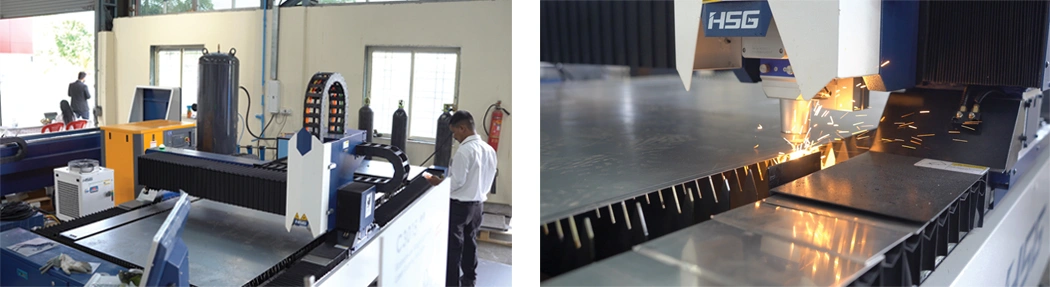
We have seen many MSME customers significantly transform their production capabilities after adopting laser technology. For example, fabricators who previously relied on manual cutting or plasma systems have been able to improve cutting precision, reduce material wastage, and increase production speed with fiber laser cutting machines.
In several cases, companies have expanded their product offerings after adopting laser welding or tube laser cutting technologies. This has allowed them to serve new industries such as automotive components, electrical enclosures, and precision fabrication.
Beyond productivity gains, the biggest impact is often improved product quality and faster turnaround times, which helps these businesses win larger contracts and compete more effectively in the market.
Q. Laser Technologies offers a wide range of solutions — from cutting and welding to bending, marking and engraving. How do you prioritise innovation in your product roadmap to balance versatility, affordability, and performance?
Our innovation strategy is driven primarily by customer needs. We closely observe industry trends and manufacturing challenges to identify areas where technology can create measurable value.
When developing or introducing new solutions, we focus on three key factors — productivity improvement, operational simplicity, and cost efficiency. Machines must deliver high performance but also be easy to operate and maintain.
We also work closely with global technology partners and continuously invest in application development to ensure our solutions remain competitive. Ultimately, our goal is to provide technology that helps manufacturers produce better products faster and more efficiently.
Q. Tell us about your in-house innovations, such as the PhotonX product line. How does it reflect the “Make in India” ethos and compete with global alternatives?
PhotonX represents our commitment to developing reliable, high-performance laser solutions tailored for the Indian manufacturing environment. Through this product line, we aim to combine global technology standards with localized engineering and application support.
The PhotonX portfolio includes laser marking systems, laser welding machines, fiber laser cutting solutions, and other fabrication technologies. These solutions are designed to deliver performance comparable to global alternatives while offering better service accessibility and cost efficiency for Indian customers.
By building technology capabilities locally, we also contribute to the broader “Make in India” vision and support the growth of domestic manufacturing ecosystems.
Q. How do you see laser technology reshaping the future of Indian manufacturing, particularly in sectors like automotive, aerospace, and tooling?
Laser technology is becoming a key enabler for modern manufacturing because it offers unmatched precision, speed, and flexibility. As industries move toward higher quality standards and automation, laser-based processes will play an increasingly important role.
In sectors like automotive and aerospace, manufacturers are focusing on lightweight materials, complex designs, and tighter tolerances. Laser cutting, welding, and marking technologies are ideally suited to meet these requirements.
I believe we will also see greater integration between laser systems, robotics, and digital manufacturing platforms, creating smarter and more efficient production environments.
Q. With rising competition and rapid technological change, how does Laser Technologies maintain relevance and differentiation in the market?
Our differentiation lies in our approach to customer partnership rather than simply equipment supply. We focus on understanding customer applications, providing end-to-end solutions, and supporting them throughout the lifecycle of the technology.
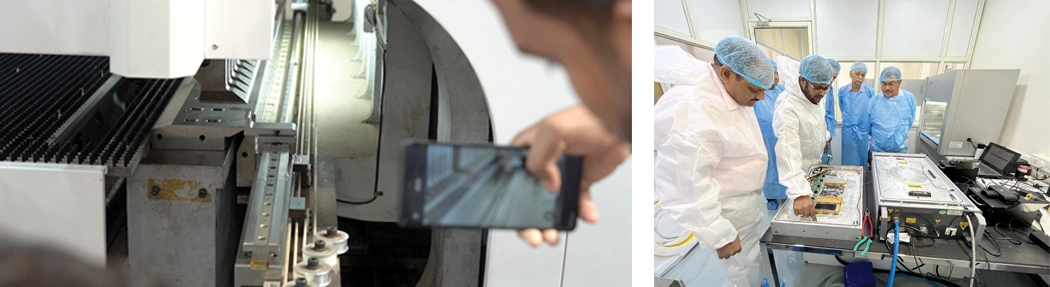
We also invest in technology centers where customers can evaluate machines through live demonstrations and application trials. This hands-on experience helps them make informed decisions.
In addition, our strong service network and technical expertise ensure that customers receive reliable support, which is critical for maintaining productivity in manufacturing environments.
Q. Recently, Laser Technologies was recognized as a ‘Great Place to Work’. What cultural principles or leadership practices have contributed to building such a work environment?
At Laser Technologies, we believe that strong organizations are built on empowered teams. We encourage open communication, collaboration,
and continuous learning across the company.
Our leadership philosophy focuses on giving individuals the opportunity to take ownership and grow professionally. We also invest in training, skill development, and knowledge sharing so that our team stays ahead in a rapidly evolving technology landscape.
Creating a positive work environment is not just about recognition; it is about building a culture where people feel valued and motivated to contribute to the company’s long-term vision.
Q. Looking ahead, what are your strategic priorities for the next 3–5 years — in terms of product innovation, market expansion, and supporting the broader manufacturing ecosystem in India?
Over the next few years, our focus will be on three key priorities. First, we will continue expanding our product portfolio with advanced solutions in laser processing, bending, automation, and smart manufacturing technologies. Second, we aim to strengthen our presence across key industrial regions in India while building deeper partnerships with manufacturers and technology providers. Third, we want to play a larger role in supporting the growth of India’s manufacturing ecosystem by enabling MSMEs to adopt advanced technologies. By doing so, we hope to contribute to building a more competitive and innovation-driven manufacturing sector in the country.
Dr. Rakesh Agarwal is widely regarded as a pioneer of the Laser Revolution in India, having made advanced laser solutions accessible to the country’s MSME sector. As the Founder and Managing Director of Laser Technologies Pvt. Ltd., he has played a defining role in building one of India’s fastest-growing laser technology enterprises, known for its technical excellence, customer-centric approach, and strong global partnerships.
His journey is marked by determination and vision, beginning in a small town in Northern India and evolving into the leadership of a ₹300 crore enterprise based in Mumbai. With a Doctorate of Technology in Lasers and Manufacturing, a Master’s degree in Electronics and over two decades of corporate experience, Dr. Agarwal co-founded Laser Technologies in 2011 with his close associate, the late Mr. Sunil Rangari. What started as a two-member venture has grown into a 150+ strong organization today, serving a wide spectrum of industries across India and collaborating with leading manufacturers from Europe, the United States, and Asia.
Widely recognized for his domain expertise and strategic insight, Dr. Agarwal is an active contributor to the global laser technology ecosystem. He is a life member of several prominent industry bodies, including the Indian Welding Society, Indian Laser Association, Bombay Industries Association, Laser Industries Association of India, and TTC MIDC Industries Association.
His international perspective is further strengthened through his work as a consultant to organizations such as Ridgetop Research and Coleman Research Group in the United States, and Cognolink in the United Kingdom, where he advises on laser technologies, applications, and market dynamics.
Under his leadership, Laser Technologies has pioneered several industry-first initiatives that have significantly enhanced the accessibility and adoption of laser solutions in India namely, initiating India’s First Laser Repair Centre, developing an e-commerce platform for laser consumables and launching Laser Gurukul – India’s only dedicated training centre for laser machines. Dr. Agarwal has also been conferred the Atal Achievement Award on the 100th birth anniversary of Shri Atal Bihari Vajpayee. His professional journey and impact have been featured in the book “Change Makers of Indian Manufacturing”, underscoring his role in shaping modern industrial practices in India.
Dr. Rakesh’s inspirational journey has been featured on the Jio Hotstar series, Rising Bharat, with over 20 million views.
Beyond his professional accomplishments, Dr. Agarwal remains deeply committed to inclusive growth and social responsibility. His efforts in education, skill development, and industry advancement reflect a strong belief in contributing to society while building sustainable business value. Through his leadership, he continues to influence the trajectory of India’s laser technology sector while inspiring a new generation of entrepreneurs and industry professionals.