




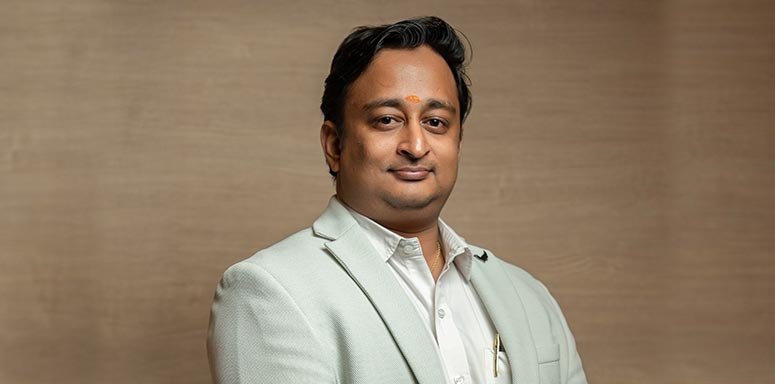
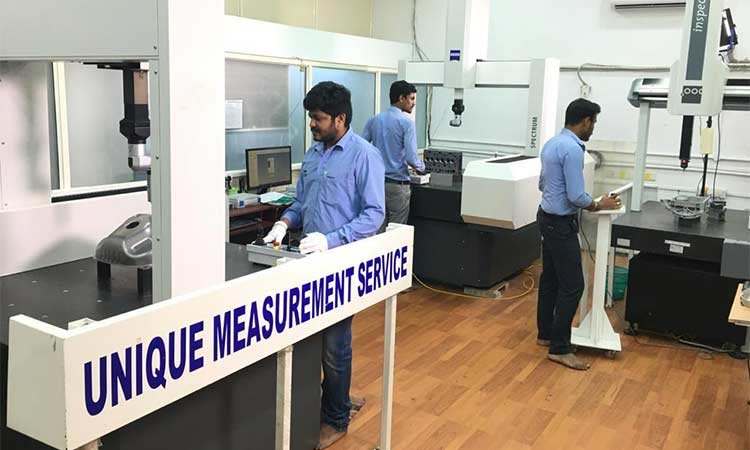
“In an era where manufacturing competitiveness is defined not just by production volume but by engineering precision, quality assurance, and technological integration, Unique Measurement Service (UMS) stands as one of India’s foremost metrology and measurement service organizations. Since its inception in 2015, UMS has played a pivotal role in elevating quality standards across automotive, aerospace, metal forming, heavy engineering, and allied sectors by providing high-precision measurement, calibration, scanning, and inspection services backed by global certifications and modern equipment. Dr. Karthik reflects on his professional journey, transformation of the metal forming industry, core principles or practices that have helped him build resilient organizations and teams, and major challenges & opportunities in the industry:
Dr. Karthik N
A Member of our Editorial Board, is Founder & Director of
UMS Metrology India Pvt. Ltd.
Q. Looking back at your professional journey in metal forming and manufacturing, what defining moments or decisions shaped your leadership philosophy and approach to the industry?
My professional journey has been deeply rooted in the shop floor reality of Indian manufacturing. One defining moment was realizing that quality is not an inspection activity—it is a culture. Early in my career, I saw how gaps in measurement, process understanding, and decision-making directly impacted productivity, customer trust, and profitability.
The decision to build Unique Measurement Service (UMS) as a pan-India, technology-driven metrology organization was pivotal. Instead of operating as a conventional service provider, we focused on partnering with customers in their manufacturing and forming challenges—from tooling validation to in-process quality assurance.
This shaped my leadership philosophy:
- Stay close to the shop floor, invest in people, and use data and measurement as enablers of growth—not policing tools.
Q. How has the metal forming sector in India transformed over the years—from technology, skill sets, & quality expectations to global competitiveness—and what changes stand out most to you?
The transformation has been significant and irreversible.
Earlier, the industry was driven mainly by cost and volume. Today, it is driven by precision, repeatability, traceability, and global compliance. Key changes that stand out are:
- Technology shift: From manual presses and conventional tooling to servo presses, simulation-driven die design, automation, and digital metrology
- Skill evolution: Engineers now need exposure to CAD/CAM, forming simulation, GD&T, SPC, and Industry 4.0 tools
- Quality expectations: OEMs and global customers demand zero-defect mindset, PPAP readiness, and real-time data
- Global competitiveness: Indian metal forming companies are no longer just suppliers—they are global partners, aligned with EV, aerospace, and defence ecosystems
India’s strength today lies in combining cost efficiency with engineering intelligence, and this is where the next decade of growth will come from.

Q. What core principles or practices have helped you build resilient organizations and teams in an industry known for cyclical demand and intense competition?
Resilience comes from discipline, diversification, and people development.
At UMS, three practices helped us build stability even during downturns:
1. Process-driven operations
Clear SOPs, standardization, and measurable KPIs reduce dependency on individuals and help scale sustainably.
2. Continuous skill development
Investing in training engineers, freshers, and specialists ensures readiness for future technologies and customer needs.
3. Customer-centric adaptability
Instead of reacting to cycles, we aligned our services with long-term customer quality and compliance needs, which remain constant even in slowdowns.
Most importantly, we focused on building a culture of ownership and learning, where teams see challenges as opportunities to improve.
Q. In your view, what are the most critical challenges and opportunities facing India’s metal forming ecosystem today—be it materials, automation, sustainability, or talent development?
India’s metal forming ecosystem stands at a strategic inflection point.
Key Challenges
• Advanced materials (AHSS, aluminium, titanium) demand new forming knowledge and tooling capabilities
• Skill gaps between academic learning and shop-floor application
• Inconsistent adoption of automation and digital quality systems
• Sustainability pressures related to material utilization, energy efficiency, and waste reduction
Major Opportunities
• Make in India + Global China+1 strategy
• EV, defence, aerospace, and infrastructure growth
• Smart factories, digital metrology, and predictive quality
• Building centres of excellence for tooling, forming simulation, and measurement
Organizations that integrate materials science, forming technology, automation, and measurement will lead the next
growth phase.
Q. What advice would you offer to the next generation of engineers, entrepreneurs, and leaders entering the metal forming space, and what mindset will be most crucial for future success?
My advice is simple but powerful:
• Master the fundamentals, embrace technology, and stay curious.
For young engineers and leaders:
• Spend time on the shop floor, not just in software
• Understand materials, tooling, and process behavior
• Learn measurement, data interpretation, and problem-solving
• Be open to continuous learning and ross-functional exposure
The most crucial mindset for fuure success is adaptability with discipline. The industry will evolve rapidly—ut those who combine technical depth, digital thinking, and ethical leadership will create lasting impact.
Closing Note for FORMING TECH REVIEW Launch
Platforms like Forming Tech Review play a vital role in connecting technology providers, manufacturers, academia, and young engineers—creating a shared vision for India’s manufacturing future.