


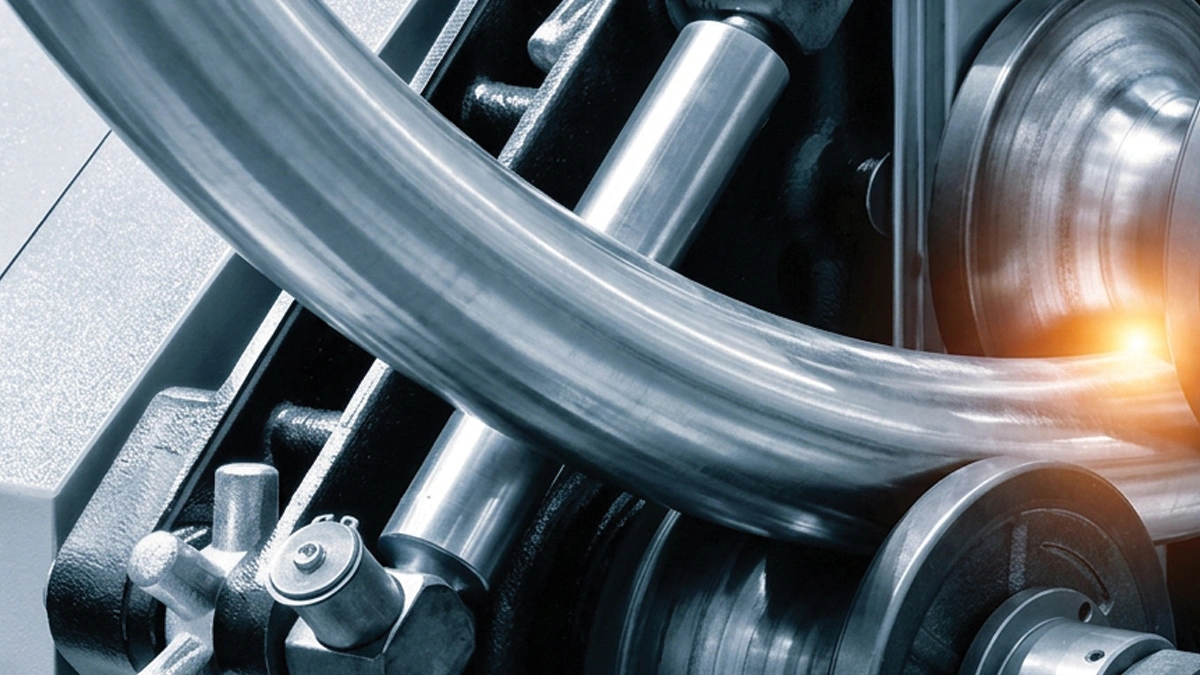
Tube bending, often perceived as a straightforward forming process, is in reality a sophisticated blend of engineering science, material behavior, and craftsmanship. From intricate automotive exhaust systems to critical aerospace pipelines and architectural structures, tube bending plays a vital role in shaping the backbone of modern industry. What elevates it to an “art” is the delicate balance between maintaining dimensional accuracy and preserving material integrity while achieving complex geometries.
Understanding the Tube Bending Process
At its core, tube bending involves permanently deforming a tube or pipe to a desired angle or contour without compromising its cross-sectional integrity. Unlike simple bar bending, tubes present unique challenges due to their hollow structure. During bending, the outer radius tends to thin and stretch, while the inner radius compresses, often leading to defects such as wrinkling, ovality, or even collapse.
To mitigate these issues, a variety of bending techniques are employed:
- Rotary Draw Bending: The most widely used method, ideal for tight radii and high precision applications. A mandrel is often inserted into the tube to support the internal diameter and prevent collapse.
- Roll Bending: Suitable for large-radius bends, commonly used in structural and architectural applications.
- Compression Bending: A simpler method, typically used where precision is less critical.
- Induction Bending: Uses localized heating to bend large-diameter pipes, often in oil & gas and infrastructure projects.
Each method is selected based on material type, wall thickness, bend radius, and end-use requirements.
Equipment: Where Precision Meets Engineering
Modern tube bending machines are highly specialized and engineered for repeatability and control. The most common equipment includes:
a) CNC Tube Bending Machines
Computer Numerical Control (CNC) machines have revolutionized tube bending by enabling multi-axis control. These machines can execute complex bends in multiple planes with high precision, ensuring consistency across large production volumes. Parameters such as bend angle, rotation, and feed length are programmed digitally, minimizing human error.
b) Mandrels and Tooling
Mandrels are critical in maintaining the tube’s internal shape during bending. Depending on the application, different types—plug, ball, or flexible mandrels—are used. Wiper dies and pressure dies further assist in controlling material flow, reducing defects like wrinkling and flattening.
c) All-Electric Benders
A significant advancement in recent years, all-electric tube benders offer improved energy efficiency, faster setup, and superior accuracy compared to hydraulic machines. They also enable smoother motion control, which is crucial for thin-walled or high-value materials.
d) Measurement and Inspection Systems
Laser-based measurement systems and coordinate measuring machines (CMMs) are increasingly integrated into bending operations to ensure dimensional accuracy and compliance with tight tolerances.
Automation: Transforming the Craft
Automation is redefining tube bending from a skill-intensive operation to a highly controlled, data-driven process. Robotic loading and unloading systems are now commonly paired with CNC benders, enabling continuous production with minimal human intervention.
Advanced software plays a crucial role in this transformation. Simulation tools allow engineers to visualize the bending process, predict material behavior, and optimize parameters before actual production. This reduces trial-and-error, saves material, and shortens development cycles.
Industry 4.0 technologies further enhance this ecosystem. Sensors embedded in machines monitor parameters such as force, torque, and tool wear in real time. Predictive maintenance algorithms help avoid unexpected downtime, while data analytics enable continuous process improvement.
Material Considerations: The Science Behind the Art
Different materials respond differently to bending forces. Mild steel, stainless steel, aluminum, copper, and exotic alloys like titanium each present unique challenges.
- Ductility: Materials with higher ductility are easier to bend without cracking.
- Springback: After bending, materials tend to partially return to their original shape. Compensation techniques must be applied to achieve accurate angles.
- Wall Thickness: Thin-walled tubes are more prone to deformation and require precise control and support.
Understanding these properties is essential for selecting the right process parameters and tooling, underscoring the importance of expertise in tube bending.
Applications: Ubiquitous and Critical
1. Automotive Industry
Tube bending is extensively used in exhaust systems, fuel lines, brake lines, and structural components. The rise of electric vehicles has further expanded its role in battery cooling systems and lightweight structures.
2. Aerospace Sector
Precision and reliability are paramount in aerospace applications. Tube bending is used for hydraulic lines, fuel systems, and structural assemblies, often involving high-performance alloys.
3. Oil & Gas and Energy
Large-diameter pipe bending, especially through induction methods, is crucial for pipelines and power plants. These applications demand high strength and durability under extreme conditions.
4. Construction and Architecture
From handrails and frameworks to aesthetically appealing structures, tube bending combines functionality with design flexibility in the built environment.
5. Furniture and Consumer Goods
Tube bending enables the creation of ergonomic and visually appealing designs in furniture, fitness equipment, and appliances.
Quality and Challenges
Despite technological advancements, tube bending remains a process where precision is hard-earned. Common challenges include:
- Wrinkling and Buckling: Caused by excessive compressive forces on the inner radius.
- Ovality: Distortion of the circular cross-section.
- Surface Defects: Scratches or marks from tooling.
- Springback Variability: Especially in high-strength materials.
Achieving consistent quality requires a combination of proper tooling, optimized machine parameters, and skilled oversight.
Sustainability and Efficiency
Modern tube bending processes are increasingly aligned with sustainability goals. Efficient material utilization, reduced scrap, and energy-efficient machines contribute to greener manufacturing. All-electric benders, in particular, are gaining popularity for their lower energy consumption and reduced environmental impact.
The Future of Tube Bending
The future of tube bending lies in greater integration of digital technologies. Artificial intelligence and machine learning are expected to further refine process optimization, enabling adaptive control systems that adjust parameters in real time. Hybrid manufacturing approaches, combining bending with additive and subtractive processes, may open new design possibilities.
Moreover, as industries demand lighter, stronger, and more complex components, the role of tube bending will continue to expand. Innovations in tooling, materials, and automation will push the boundaries of what is achievable.
Conclusion
The art of tube bending is a testament to the harmony between engineering precision and material science. What appears to be a simple curve is, in fact, the result of meticulous planning, advanced technology, and deep expertise. As industries evolve and design complexities increase, tube bending will remain a cornerstone of modern manufacturing—quietly shaping the structures and systems that define our world.