


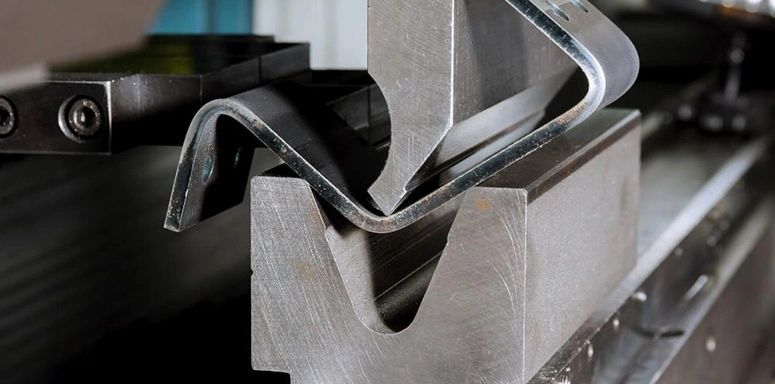
Metal forming is a critical manufacturing process that shapes metal parts by deforming them, rather than removing or cutting material, as in machining. This approach maintains the integrity and strength of the material, making it ideal for industries that demand durable components, such as automotive, aerospace, construction, and electronics. Over the years, innovations in metal forming processes and equipment have significantly improved the quality, efficiency, and sustainability of manufacturing.
This article delves into the key metal forming processes, the equipment used, and recent innovations that are shaping the future of the industry.
An Overview of Metal Forming
Metal forming involves the application of force to metal workpieces to shape them into desired geometries. Unlike casting, which relies on melting and solidification, or machining, which removes material, forming processes involve plastic deformation, meaning the material is shaped without returning to its original form. The three main categories of metal forming processes are:
- Bulk Deformation Processes: These include forging, rolling, extrusion, and drawing, where the workpiece’s thickness or cross-sectional area is significantly changed.
- Sheet Metal Forming: Processes such as bending, deep drawing, and stretching are used to form thin metal sheets.
- Powder Forming: A method that involves compacting and sintering metal powders to create dense, strong parts.
Major Metal Forming Processes
1. Forging
Forging involves compressing metal between two dies to create parts with excellent mechanical properties. Forging can be done at high temperatures (hot forging) or at room temperature (cold forging). Commonly used for making parts like gears, crankshafts, and aerospace components, forging enhances the material’s strength and durability.
- Hot Forging: Metal is heated to a temperature where it becomes ductile and easy to shape. The process allows for high levels of deformation without the risk of work hardening, but requires energy-intensive equipment to maintain high temperatures.
- Cold Forging: Performed at room temperature, cold forging offers superior surface finish and dimensional accuracy. However, it requires higher forging forces and can lead to strain hardening.
Innovations in forging have focused on precision forging, where tighter tolerances and reduced post-processing are achieved, and incremental forging, which allows complex shapes to be formed in smaller steps, minimizing material waste.
2. Rolling
Rolling is a bulk deformation process where metal is passed between two rollers to reduce its thickness and achieve a desired shape. It is widely used in manufacturing metal sheets, plates, and beams. The process can be classified into:
- Hot Rolling: Metal is heated above its recrystallization temperature, allowing large deformations.
- Cold Rolling: Done at room temperature, cold rolling improves the surface finish and enhances the strength of the material due to work hardening.
Innovations in rolling include advancements in roller design, automated control systems, and high-speed rolling processes that improve production rates. Additionally, thin slab casting and rolling (TSCR) systems have been developed to minimize the number of passes and reduce energy consumption.
3. Extrusion
Extrusion involves forcing metal through a die to produce long parts with a consistent cross-sectional profile, such as tubes, rods, or beams. This process is commonly used for non-ferrous metals like aluminum and copper.
There are two main types of extrusion:
- Direct Extrusion: The billet is pushed through the die in the same direction as the applied force.
- Indirect Extrusion: The die is pushed through the billet, which reduces friction and increases material efficiency.
Innovative extrusion methods such as hydrostatic extrusion (where pressure is applied through a fluid medium) and incremental extrusion are being used to reduce energy consumption and improve the precision of the process.
4. Drawing
Drawing is used to produce wire, rods, or tubes by pulling metal through a die. The process involves tensile forces and is typically used for ductile materials like copper, aluminum, and steel.
- Wire Drawing: This process produces extremely fine wires for use in electrical applications or as reinforcement in composite materials.
Innovations in drawing processes include ultrasonic drawing, which reduces friction and wear on the dies, improving production rates and tool life. Additionally, laser-assisted drawing uses localized heating to enhance material ductility, allowing for finer and more precise wires to be drawn.
5. Sheet Metal Forming
Sheet metal forming encompasses a wide range of processes used to shape thin metal sheets. Some of the most common include:
- Bending: Involves deforming metal around a straight axis, commonly used to make frames, brackets, and enclosures.
- Deep Drawing: A process where a metal sheet is pressed into a die to create hollow, cylindrical, or box-shaped parts. Common applications include making cans, automotive panels, and kitchen sinks.
- Stretch Forming: Metal sheets are stretched over a die, often used in aerospace and automotive industries to form large panels.
6. Powder Forming
In powder metallurgy, metal powders are compacted into a mold and then heated (sintered) to form a solid piece. This technique is often used for making parts with complex geometries, such as gears and filters, that would be difficult or expensive to machine.
Powder metallurgy is evolving with additive manufacturing (3D printing), allowing manufacturers to create custom, complex parts directly from digital models without the need for molds or dies.
Equipment Used
Presses
Presses are used extensively in metal forming to apply compressive forces. They come in different types, including hydraulic presses, mechanical presses, and servo-electric presses. The type of press selected depends on the material, thickness, and required force.
- Hydraulic Presses: These use hydraulic cylinders to generate force and are well-suited for deep drawing and forming operations.
- Mechanical Presses: Powered by mechanical flywheels, they offer high-speed and precision operations ideal for stamping.
- Servo Presses: The latest innovation, servo presses offer precise control over the ram movement, allowing for improved forming accuracy and flexibility.
Rollers
Rollers are crucial in processes like rolling and bending. Computer-controlled roller machines ensure precise and automated rolling operations, reducing human error and improving productivity.
Furnaces
Furnaces are used in hot forging and hot rolling processes to heat metal to the desired temperature. Modern energy-efficient furnaces incorporate smart controls to reduce energy consumption and optimize heating cycles.
Innovations in Metal Forming
The metal forming industry is continually innovating to improve precision, reduce costs, and enhance sustainability. Some key innovations include:
- Advanced Materials: The use of new alloys, such as titanium and high-strength steel, is becoming more common in metal forming processes, particularly in the aerospace and automotive sectors where lightweight, durable materials are essential.
- High-Speed Forming: Techniques such as electromagnetic forming, explosive forming, and hydroforming use high-speed forces to shape metals, offering advantages in terms of precision and material efficiency.
- Industry 4.0 and Automation: The integration of Industry 4.0 technologies like sensors, data analytics, and robotics is revolutionizing metal forming. Automated systems monitor and adjust forming processes in real time, ensuring consistency and reducing downtime.
- Sustainability: Efforts to reduce energy consumption, material waste, and emissions have led to the development of eco-friendly metal forming technologies. For instance, incremental sheet forming reduces material waste by forming parts gradually, while laser-assisted forming uses localized heating to minimize energy use.
- Simulation and AI: Finite element analysis (FEA) software and AI-driven simulations allow manufacturers to predict material behavior and optimize forming processes before production begins. This reduces trial-and-error, material waste, and time-to-market.
Conclusion
Metal forming is a versatile and essential process in modern manufacturing, producing everything from everyday items to complex, high-performance components. With continuous advancements in materials, equipment, and processes, metal forming is becoming more efficient, precise, and sustainable. Innovations such as Industry 4.0 integration, eco-friendly techniques, and advanced simulation tools are pushing the boundaries of what is possible, ensuring that metal forming remains at the heart of industrial production for years to come.
– P.K. Balasubramanian