


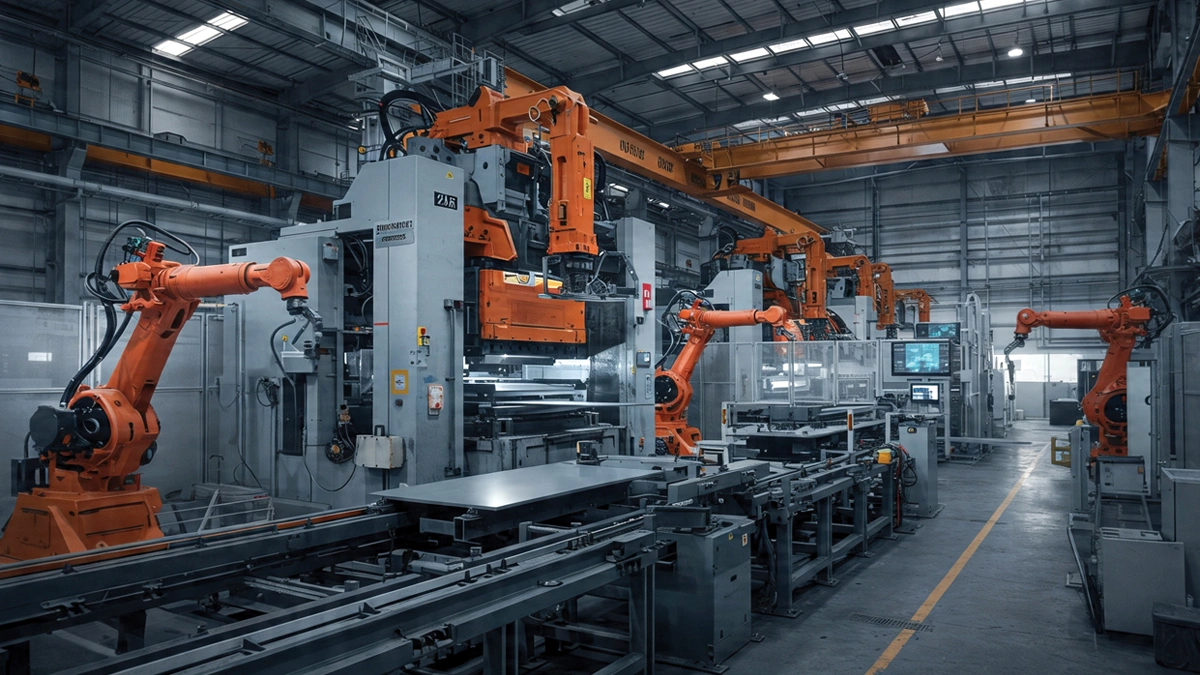
Sheet metal forming, a cornerstone of modern manufacturing, has traditionally relied on a combination of mechanical prowess and operator skill. However, as industries demand higher productivity, tighter tolerances, and greater flexibility, automation has emerged as a transformative force. Today, automation in sheet metal forming is not merely about replacing manual effort—it is about creating intelligent, adaptive, and highly efficient production ecosystems that deliver consistent quality at scale.
The Evolution of Sheet Metal Forming
Sheet metal forming encompasses processes such as blanking, bending, stamping, deep drawing, and roll forming. These operations are widely used in industries ranging from automotive and appliances to aerospace and construction. Historically, these processes involved standalone machines with significant manual intervention for loading, unloading, and quality checks.
The shift toward automation has redefined this landscape. Modern forming lines integrate presses, feeders, transfer systems, and inspection units into a seamless, synchronized workflow. This evolution is driven by the need to reduce cycle times, improve repeatability, and meet the growing complexity of component designs.
Key Elements of Automation
A. Automated Material Handling
Material handling is often the first step in automation. Systems such as coil feeders, straighteners, and blank destackers ensure a continuous and consistent supply of material to the forming process. Robotic arms and gantry systems are used to load and unload sheets, reducing manual effort and improving safety.
B. Transfer Systems
In multi-stage forming operations, automated transfer systems move parts between stations with precision and speed. Crossbar and tri-axis transfer mechanisms are commonly used in press lines, enabling synchronized movement and minimizing idle time.
C. Robotic Integration
Industrial robots play a central role in modern sheet metal forming. They handle tasks such as part manipulation, stacking, welding, and assembly. Their flexibility allows manufacturers to adapt quickly to different product configurations.
D. CNC and Servo Presses
The adoption of CNC-controlled and servo-driven presses has significantly enhanced automation. These machines offer programmable stroke profiles, enabling precise control over forming operations. Servo presses, in particular, allow variable speed and dwell control, optimizing the forming process for different materials.
E. Inline Inspection Systems
Automation extends to quality control, with inline inspection systems using vision technology, laser scanners, and sensors to detect defects in real time. This reduces the need for post-process inspection and ensures immediate corrective action.
Digitalization and Smart Manufacturing
Automation in sheet metal forming is increasingly intertwined with digital technologies. Industry 4.0 concepts are enabling smarter, more connected production environments:
Real-Time Monitoring: Sensors collect data on parameters such as force, temperature, and vibration, providing insights into process performance.
Data Analytics: Advanced analytics tools identify trends, optimize parameters, and improve overall equipment effectiveness (OEE).
Digital Twins: Virtual models of forming processes allow simulation and optimization before actual production.
Predictive Maintenance: Machine learning algorithms predict equipment failures, reducing downtime and maintenance costs.
These capabilities transform sheet metal forming into a data-driven process, where decisions are based on real-time insights rather than intuition.
Advantages of Automation
i. Enhanced Productivity
Automated systems operate continuously with minimal downtime, significantly increasing output. Faster cycle times and reduced manual intervention contribute to higher throughput.
ii. Improved Quality and Consistency
Automation ensures precise control over process parameters, resulting in consistent part quality. Variability caused by human factors is minimized.
iii. Flexibility and Scalability
Modern automated systems can be reprogrammed to handle different products, enabling quick changeovers and supporting high-mix, low-volume production.
iv. Safety and Ergonomics
Automation reduces the need for manual handling of heavy or hazardous materials, improving workplace safety and reducing operator fatigue.
v. Cost Efficiency
While the initial investment may be high, automation leads to long-term cost savings through reduced labor, lower scrap rates, and improved efficiency.
Applications Across Industries
1. Automotive
Automation is extensively used in the production of body panels, structural components, and chassis parts. High-speed press lines with robotic handling are standard in automotive manufacturing.
2. Appliances and Consumer Goods
Sheet metal forming is used to produce components for appliances such as refrigerators, washing machines, and air conditioners. Automation ensures high-volume production with consistent quality.
3. Aerospace
In aerospace, automation supports the forming of complex, lightweight components with stringent quality requirements.
4. Construction and Infrastructure
Automated roll forming and bending processes are used to produce structural elements, roofing panels, and other construction components.
Challenges and Considerations
Despite its advantages, automation in sheet metal forming presents several challenges:
High Capital Investment: Setting up automated systems requires significant upfront costs.
Integration Complexity: Combining different machines, robots, and software systems can be complex.
Skill Requirements: Operating and maintaining automated systems requires specialized skills.
Customization Needs: Adapting automation to specific products and processes can be challenging.
Addressing these challenges requires careful planning, investment in training, and collaboration with technology providers.
Sustainability and Efficiency
Automation contributes to sustainability by optimizing material usage, reducing waste, and improving energy efficiency. Precise control over forming processes minimizes scrap and rework, while energy-efficient machines and systems reduce environmental impact.
Additionally, automated systems enable better tracking and management of resources, supporting sustainable manufacturing practices.
The Future of Automation in Sheet Metal Forming
The future of sheet metal forming lies in greater integration of automation with emerging technologies. Collaborative robots (cobots) will enable closer interaction between humans and machines, enhancing flexibility. Artificial intelligence will further refine process optimization, enabling adaptive systems that respond to changing conditions in real time.
Advancements in sensor technology and connectivity will lead to more sophisticated monitoring and control systems, while cloud-based platforms will facilitate data sharing and remote management.