


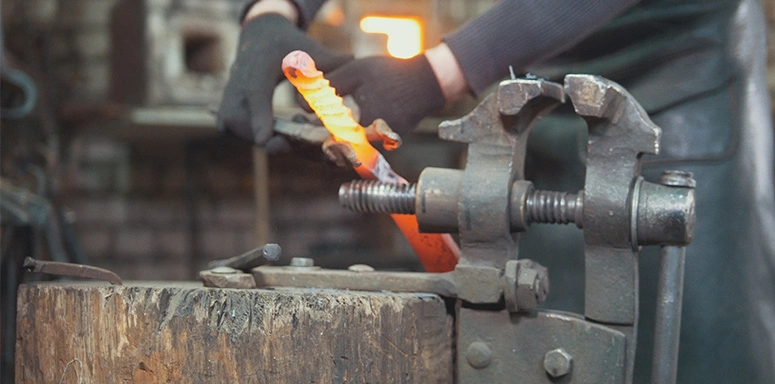
Heavy engineering forms the backbone of industrial development, supplying critical components for sectors such as power generation, railways, infrastructure, mining, oil & gas, defence and large-scale manufacturing. Components produced for these industries are characterized by large dimensions, thick sections, high load-bearing requirements and stringent safety standards. In such demanding applications, metal forming remains a preferred manufacturing route due to its ability to impart superior mechanical properties, structural integrity and material efficiency. At the heart of this process lies tooling—robust, precisely engineered and built to withstand extreme forces and long production cycles. In heavy engineering, tooling is not merely a production aid; it is a strategic asset that directly impacts reliability, productivity and lifecycle performance.
The Critical Role of Tooling in Heavy Engineering Applications
Unlike light or high-volume sheet metal applications, metal forming in heavy engineering involves forming large plates, thick sections and high-strength materials under immense pressures. Tooling must accommodate massive forming loads, resist wear and deformation, and deliver consistent results over extended production runs. Any failure or inaccuracy in tooling can result in costly downtime, material wastage and safety risks.
Tooling determines how effectively material flows during forming, how stresses are distributed, and how defects such as cracking, wrinkling or excessive springback are controlled. In heavy engineering, where parts often operate under extreme conditions, tooling also plays a decisive role in ensuring the metallurgical soundness and dimensional accuracy required for long-term service.
Tooling Types Used in Heavy Engineering Metal Forming
Heavy engineering relies on a wide spectrum of metal forming processes, each demanding specialized tooling solutions. Large press tools are used for forming thick plates and structural components, while forging dies are employed for shafts, flanges, couplings and critical load-bearing parts. Extrusion dies are used in applications requiring long, continuous profiles with high structural integrity, such as in power transmission and rail infrastructure.
In sectors such as railways and defence, flash butt welding and forming tools are used in conjunction with forming operations to produce long rails and heavy assemblies. Large draw dies and bending tools are commonly used for forming boiler plates, pressure vessels, shipbuilding components and heavy enclosures. These tools are typically custom-built, as standard tooling rarely meets the size and load requirements of heavy engineering applications.
Tool Materials for Extreme Loads and Long Service Life
The choice of tool material is particularly critical in heavy engineering due to the high forces and severe wear conditions involved. Conventional tool steels are often reinforced with higher alloy content to improve toughness, resistance to plastic deformation and fatigue strength. Hot work tool steels are widely used in forging and high-temperature forming processes, where resistance to thermal cracking and softening is essential.
Powder metallurgy tool steels and carbide inserts are increasingly adopted in critical wear zones to extend tool life and reduce maintenance intervals. Surface treatments such as nitriding, hard chrome plating and advanced PVD coatings help enhance surface hardness, reduce friction and prevent galling when forming thick or abrasive materials. In heavy engineering, the emphasis is not only on initial tool performance but also on predictable and extended service life.
Tool Design and Simulation for Large-Scale Forming
Designing tooling for heavy engineering applications is a complex engineering task, requiring deep understanding of material behaviour, forming forces and machine capabilities. Modern CAD and CAE tools have transformed this process, allowing engineers to simulate forming operations, predict stress distribution and optimize tool geometry before manufacturing begins.
Forming simulation is particularly valuable when dealing with thick plates, high-strength steels and complex geometries, where trial-and-error approaches are costly and time-consuming. Simulation helps identify potential issues such as uneven material flow, excessive thinning or die overloading, enabling corrective measures at the design stage. This approach significantly reduces tool development time and improves first-pass success, which is crucial in capital-intensive heavy engineering projects.
Manufacturing Precision and Assembly of Heavy-Duty Tooling
Manufacturing tooling for heavy engineering demands exceptional precision, even when dealing with large and heavy components. Large CNC machining centers, heavy-duty boring mills and advanced EDM machines are used to produce tool components with tight tolerances and excellent surface finish. Heat treatment is a critical step, as improper treatment can lead to distortion or premature failure under load.
Tool assembly in heavy engineering often involves massive components that must be aligned with extreme accuracy. Advanced metrology equipment, including large CMMs and laser trackers, is used to ensure dimensional integrity. Given the scale and cost of these tools, rigorous inspection and validation are essential before commissioning.
Managing Wear, Maintenance and Tool Life
In heavy engineering, tooling downtime can have a cascading effect on production schedules and project timelines. Therefore, proactive tool maintenance and life management are critical. Regular inspection of high-wear areas, timely regrinding or refurbishment and proper lubrication practices help maintain consistent performance.
Digital condition monitoring is gradually gaining traction, with sensors used to monitor forming loads, temperature and vibration. Such data enables predictive maintenance, allowing tool wear or fatigue issues to be addressed before they result in failure. This approach not only extends tool life but also improves overall equipment reliability and safety.
Challenges Unique to Heavy Engineering Tooling
Heavy engineering tooling faces challenges that are distinct from other manufacturing sectors. Handling and installation of large tools require specialized lifting and alignment systems. Tooling must also accommodate variations in material properties, especially when dealing with large forgings or plates sourced from different suppliers.
Another key challenge is the limited production volume of many heavy engineering components. Tools must often be designed for flexibility and durability rather than sheer output, making cost justification and ROI calculations more complex. Additionally, the shortage of skilled toolmakers with experience in large-scale tooling remains a concern, driving the need for knowledge capture and digital design practices.
Sustainability and Efficiency Considerations
Sustainability is increasingly influencing tooling strategies in heavy engineering. Durable tools with longer life cycles reduce material consumption and energy usage associated with frequent replacement. Optimized tooling also helps minimize scrap and rework, which is particularly important when dealing with expensive materials and large components.
Refurbishment, reconditioning and modular tooling concepts are gaining acceptance as cost-effective and sustainable solutions. By extending the usable life of tools and adapting them for new components, heavy engineering manufacturers can improve resource efficiency while maintaining performance standards.
Tooling as a Strategic Enabler in Heavy Engineering
As heavy engineering projects grow in scale and complexity, tooling will continue to play a pivotal role in enabling reliable and efficient metal forming. The future will see greater integration of digital design, simulation, advanced materials and smart monitoring in tooling development. Toolmakers will increasingly collaborate with OEMs and EPC contractors at early stages of project planning to deliver optimized forming solutions.
In heavy engineering, tooling is not just about shaping metal—it is about shaping infrastructure, power systems and industrial capability. Companies that invest in robust, well-engineered tooling and the expertise to manage it effectively will be better positioned to deliver high-quality components, meet demanding project timelines and build long-term competitiveness in this vital sector.