




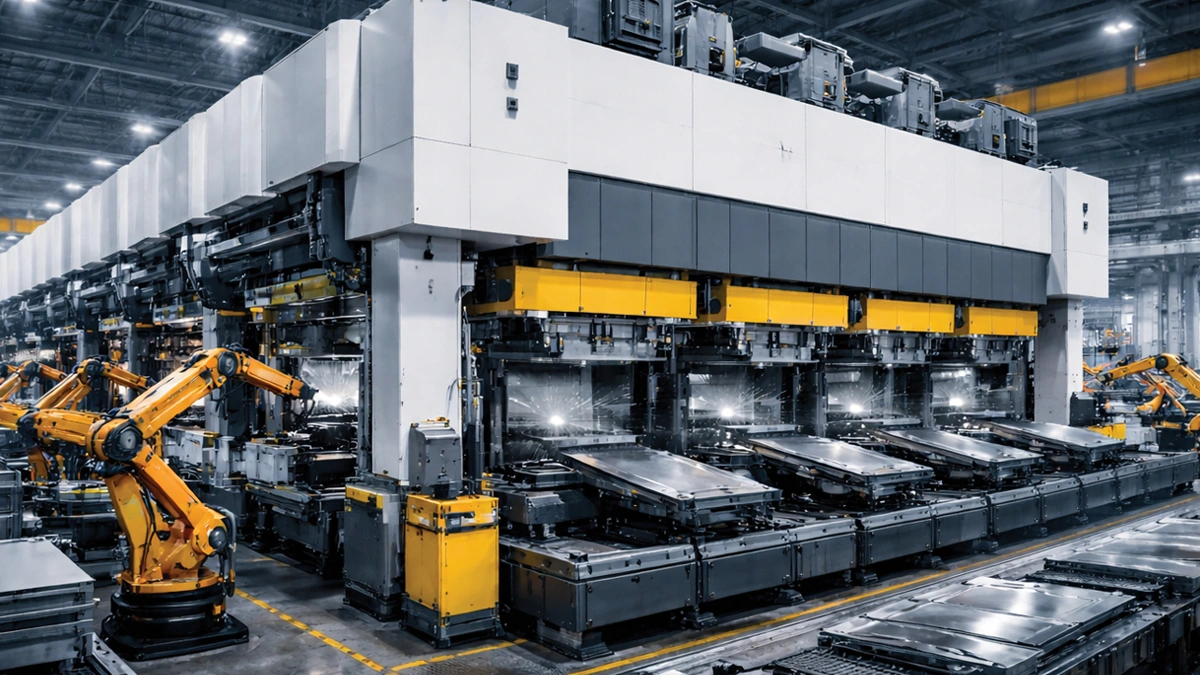
In the evolving landscape of metal forming, gigantic transfer presses stand as awe-inspiring embodiments of engineering scale, precision, and productivity. Designed to handle massive loads and produce complex components in a single, synchronized workflow, these machines have become indispensable in industries where scale, speed, and consistency are paramount. From automotive body panels to heavy structural components, gigantic transfer presses represent the convergence of mechanical robustness and digital intelligence.
Understanding Gigantic Transfer Presses
A transfer press is a multi-station forming system in which a metal blank is automatically moved through successive stages—such as drawing, bending, trimming, and punching—within a single press cycle. Unlike progressive presses, where the material remains attached to a strip, transfer presses separate the blank early, enabling greater flexibility and more complex geometries.
Gigantic transfer presses take this concept to an industrial extreme. These machines often span several meters in length, incorporate 10–20 or more die stations, and deliver forces ranging from 1,000 to over 3,500 tonnes. Their sheer scale allows them to produce large, deep-drawn, and structurally critical components with exceptional consistency.
Design Aspects: Built for Scale and Precision
1. Massive Structural Framework
At the heart of a gigantic transfer press lies its frame—typically a straight-side or four-column structure designed to withstand enormous loads. These frames are fabricated from high-strength steel or cast iron and can weigh hundreds of tonnes. Finite Element Method (FEM) analysis is extensively used during design to ensure structural rigidity, minimize deflection, and maintain alignment under extreme loads. The objective is to achieve precise slide motion and uniform force distribution, even during off-center loading conditions.
2. High-Tonnage Drive Systems
Gigantic presses are powered by mechanical, hydraulic, or increasingly, servo-driven systems. Mechanical drives provide high-speed operation, while hydraulic systems offer superior control over force and stroke. Servo presses, the latest evolution, enable programmable motion profiles—allowing variable speed, dwell time, and stroke control for optimized forming.
3. Multi-Station Die Architecture
These presses house multiple die stations arranged linearly on a large bed. Each station performs a specific operation, enabling the transformation of a raw blank into a finished component in a single cycle. The bed itself is a critical component, often reinforced with thick bolster plates to ensure dimensional stability and precise die alignment across all stations.
4. Advanced Transfer Mechanisms
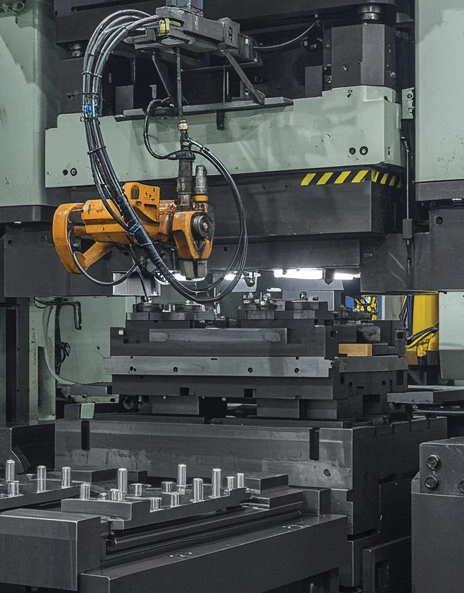
The defining feature of transfer presses is their automated part transfer system. Gigantic presses use sophisticated tri-axis or crossbar transfer systems capable of precise 3D movement—up-down, in-out, and forward-backward. These systems employ grippers, clamps, or vacuum cups to handle parts securely, ensuring seamless movement between stations without compromising accuracy or cycle time.
5. Automation and Integration
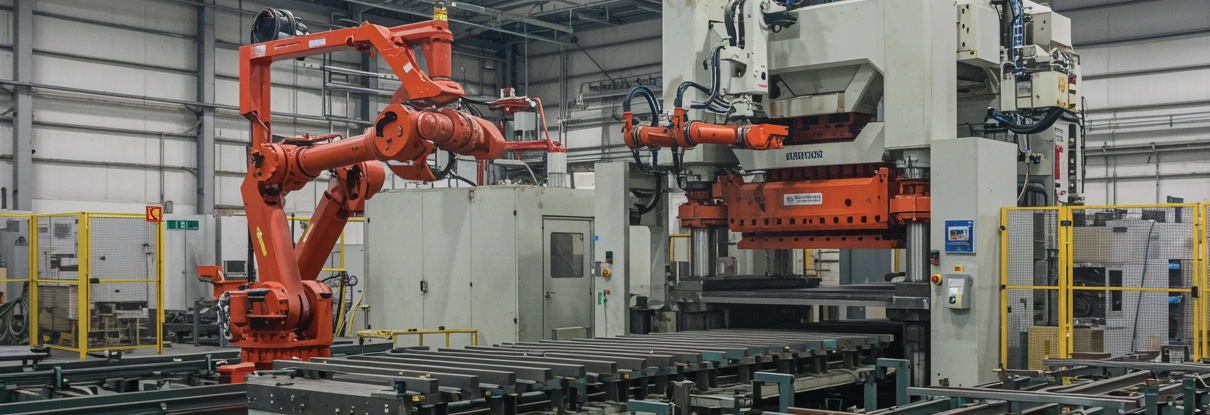
Modern gigantic transfer presses are designed with open, integration-ready architectures, allowing seamless incorporation of robots, conveyors, and blank loaders. This enables a continuous, automated production flow—from raw material feeding to finished part unloading—transforming the press into a complete manufacturing cell.

Technological Innovations: Redefining Performance
1. Servo Technology and Smart Motion Control
Servo-driven transfer presses represent a major leap forward. They allow programmable stroke profiles, enabling manufacturers to optimize forming conditions for different materials and geometries. This flexibility enhances part quality while reducing tool wear.
2. Energy Efficiency and Regenerative Systems
Innovations such as energy-regenerative cushions can return a significant portion of energy back to the system, improving overall efficiency. This is particularly important in gigantic presses, where energy consumption is substantial.
3. Digitalization and Industry
Gigantic transfer presses are increasingly equipped with advanced control systems, HMIs, and IoT-enabled sensors. These systems provide real-time monitoring of parameters such as tonnage, stroke, temperature, and vibration.Digital twins and simulation tools enable manufacturers to optimize die design, predict failures, and reduce downtime, thereby enhancing overall equipment effectiveness (OEE).
4. Flexible Manufacturing Cells
Modern installations can synchronize multiple presses in tandem, creating “flex cell” configurations capable of handling larger components or varying production requirements. This modularity enhances production flexibility without compromising throughput.
5. Quick Die Change Systems
To support high-mix production environments, gigantic presses now incorporate rapid die change mechanisms, reducing setup times and improving responsiveness to market demands.

Applications: Powering Core Industries
1. Automotive Industry
The automotive sector is the largest user of gigantic transfer presses. These machines are used to produce body panels, chassis components, structural reinforcements, and transmission parts. Their ability to handle large blanks and perform deep drawing operations makes them ideal for automotive manufacturing.
2. Aerospace and Defense
In aerospace, where precision and material integrity are critical, transfer presses are used for forming structural components, brackets, and casings. Their ability to maintain tight tolerances across multiple operations is a key advantage.
3. Heavy Engineering and Infrastructure
Gigantic presses are widely used in producing components for railways, construction equipment, and heavy machinery. These applications demand high strength and dimensional accuracy, which transfer presses deliver consistently.
Appliances and Electrical Equipment
From washing machine drums to electrical enclosures, transfer presses enable high-volume production of complex sheet metal components with excellent surface finish and repeatability.
Advantages: Why Gigantic Transfer Presses Matter
- High Productivity: Multiple operations in a single cycle drastically reduce production time.
- Precision and Consistency: Automated transfer ensures uniformity across millions of parts.
- Material Efficiency: Near-net shaping reduces scrap and secondary operations.
- Reduced Footprint: Compared to multiple standalone presses, a single transfer press line requires less space.
- Lower Lifecycle Costs: Integrated systems reduce maintenance and operational complexity.
Challenges and Considerations
Despite their advantages, gigantic transfer presses come with challenges. Their high capital cost, complex installation requirements, and need for specialized tooling can be barriers for smaller manufacturers. Additionally, their operation demands skilled personnel and robust maintenance practices.
Foundation design is another critical aspect, as these machines generate significant dynamic loads and vibrations. Energy consumption, though improving with new technologies, remains a concern for large-scale installations.
The Road Ahead
As manufacturing moves toward greater automation, sustainability, and precision, gigantic transfer presses are poised to play an even more critical role. The integration of AI, advanced materials, and smart tooling will further enhance their capabilities, enabling manufacturers to produce increasingly complex components with minimal waste and maximum efficiency.
In essence, gigantic transfer presses are not just machines—they are integrated production ecosystems. They embody the future of metal forming, where scale meets intelligence, and power meets precision.