




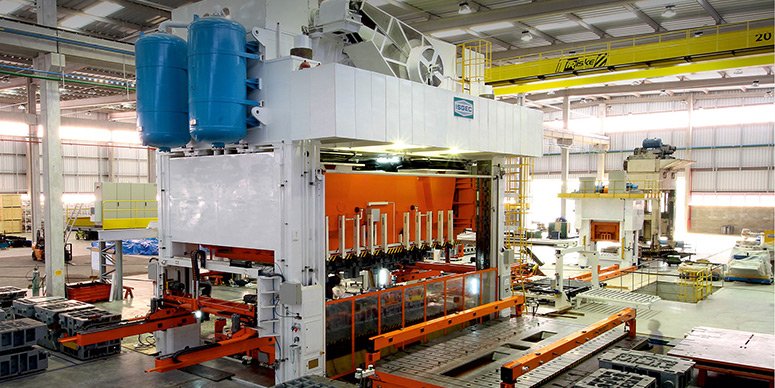
The evolution of metal forming technology has always been driven by the need for higher productivity, better precision, improved energy efficiency, and greater process control. From traditional mechanical presses to hydraulic systems, each generation has addressed specific manufacturing challenges. In recent years, servo presses have emerged as a transformative force, redefining how forming operations are designed, controlled, and optimized. By combining advanced servo motor technology with intelligent motion control, servo presses offer manufacturers unprecedented flexibility, accuracy, and efficiency.
The Difference from Conventional Presses
At the heart of a servo press lies its fundamental difference from conventional presses. Unlike mechanical presses that rely on a flywheel, crankshaft, and fixed motion curve, or hydraulic presses that depend on fluid pressure and valves, servo presses use a servo motor to directly drive the ram. This seemingly simple change unlocks a wide range of capabilities. The slide motion is no longer constrained by mechanical geometry; instead, it can be freely programmed, modified, and optimized for each specific application.
Advantages of Servo Presses
One of the most significant advantages of servo presses is programmable motion control. In traditional presses, the slide follows a fixed sinusoidal motion, regardless of the material or forming requirement. Servo presses, on the other hand, allow manufacturers to precisely control speed, position, dwell time, and acceleration at every point in the stroke. The ram can slow down during critical forming zones, pause momentarily to allow material flow, or move rapidly during non-working portions of the stroke. This level of control improves forming quality while reducing defects such as cracking, wrinkling, or springback.
Precision is another defining attribute of servo presses. Because the ram position is directly controlled by the servo motor and monitored through high-resolution encoders, positioning accuracy is significantly higher than that of mechanical systems. This makes servo presses particularly suitable for applications requiring tight tolerances, such as precision stamping, fine blanking, electronic components, and automotive parts with complex geometries. Consistent bottom dead center (BDC) positioning also enhances tool life, as dies are subjected to uniform loads and reduced impact stresses.
Energy efficiency is an increasingly important consideration in modern manufacturing, and servo presses excel in this area. Mechanical presses consume energy continuously to keep the flywheel rotating, even when no forming operation is taking place. Hydraulic presses, while flexible, often suffer from energy losses due to fluid throttling and heat generation. Servo presses, by contrast, consume power primarily during the actual forming process. Regenerative braking allows energy to be recovered during deceleration and fed back into the system or the power grid. As a result, energy savings of 30 to 60 percent are commonly reported, depending on the application and duty cycle.
Servo presses also contribute significantly to noise reduction and improved shop-floor ergonomics. The absence of a constantly rotating flywheel and reduced impact forces lead to quieter operation. Lower noise levels not only improve the working environment but also reduce the need for sound enclosures and compliance-related investments. Smooth motion profiles further reduce vibration, benefiting both machines and operators.
From a process standpoint, servo presses enable entirely new forming possibilities. Variable slide motion allows for advanced forming techniques such as incremental forming, deep drawing with controlled material flow, and multi-step forming within a single stroke. For example, in deep drawing applications, the slide can approach the workpiece rapidly, slow down during drawing, dwell briefly at the bottom to stabilize material flow, and then retract smoothly. Such motion profiles are difficult, if not impossible, to achieve with conventional presses.
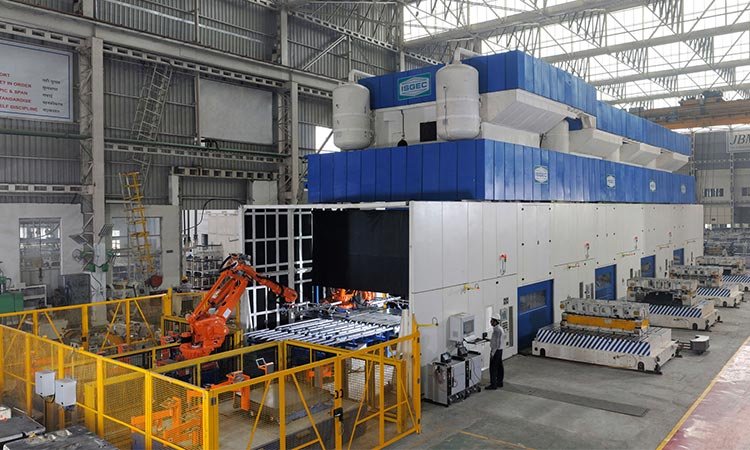

Application in Automotive Industry
In the automotive industry, servo presses are playing a crucial role in meeting the demands of lightweighting and high-strength materials. Advanced high-strength steels (AHSS), aluminum alloys, and composite-metal hybrids require precise control over forming forces and speeds. Servo presses allow manufacturers to tailor the forming process to the specific behavior of these materials, reducing scrap rates and improving part integrity. The ability to quickly switch programs also supports high-mix, low-volume production, which is becoming increasingly common in the era of electric vehicles and customized models.
Tool and die life is another area where servo presses deliver tangible benefits. Controlled acceleration and deceleration reduce shock loads on tooling, while programmable dwell functions minimize stress concentrations. Over time, this translates into fewer tool failures, longer maintenance intervals, and lower overall tooling costs. Additionally, integrated load monitoring systems can detect abnormal force patterns, enabling predictive maintenance and early detection of process deviations.
Integration with digital manufacturing systems is a natural strength of servo press technology. Modern servo presses are equipped with advanced controllers, sensors, and communication interfaces that support Industry 4.0 initiatives. Real-time data on force, position, energy consumption, and cycle time can be collected and analyzed to optimize production. Connectivity with manufacturing execution systems (MES) and quality management platforms enables closed-loop control, traceability, and continuous improvement.
Challenges
Despite their many advantages, servo presses are not without challenges. The initial investment cost is typically higher than that of conventional mechanical presses, particularly for large-tonnage applications. However, when evaluated from a total cost of ownership perspective, the benefits often outweigh the upfront expense. Energy savings, reduced tooling costs, lower scrap rates, and increased flexibility contribute to faster payback periods. Advances in motor technology and power electronics are also steadily reducing costs and expanding the feasible tonnage range of servo presses.
Another consideration is the need for skilled personnel. Programming and optimizing servo press motion profiles require a deeper understanding of both forming processes and control systems. Manufacturers must invest in training and process development to fully exploit the technology’s potential. That said, many modern servo press systems offer user-friendly interfaces, simulation tools, and pre-configured motion templates, making adoption easier than ever.
As manufacturing moves toward greater automation, customization, and sustainability, the role of servo presses is set to expand further. Their ability
to adapt quickly to changing product requirements aligns well with the demands of smart factories. Ongoing developments in artificial intelligence and machine learning promise even greater capabilities, such as self-optimizing forming processes and adaptive control based on material variability.
Conclusion
In conclusion, servo presses represent a significant leap forward in metal forming technology. By replacing fixed mechanical motion with intelligent, programmable control, they offer unparalleled precision, flexibility, and efficiency. While the transition requires investment and expertise, the long-term benefits in quality, productivity, and sustainability make servo presses a compelling choice for forward-looking manufacturers. As industries continue to push the boundaries of materials and design, servo presses are poised to play a central role in shaping the future of metal forming.